

Every swing, spark, and explosion in World of Warcraft tells a story—not just through power, but through motion. From the fiery sweep of a Pyroblast to the elegant swirl of a Healing Rain, WoW’s spellcasting animations are more than visual effects; they are the heartbeat of its combat identity. They define class fantasy, communicate rhythm, and make every battle feel alive.
This article explores how Blizzard’s animation philosophy has shaped WoW’s visual language of combat and why, even after twenty years, no MMO feels quite like it.
The Early Years: Simplicity With Purpose
In Classic WoW, spell animations were modest but effective. They relied on clarity over spectacle. A Fireball’s glowing orb or a Frostbolt’s icy trail conveyed instant recognition—players didn’t need high fidelity to feel impact. These early effects prioritized readability in chaotic battles, ensuring every visual served a gameplay purpose.

Despite their simplicity, these animations gave spells identity. A Shadow Priest’s violet haze or a Druid’s nature glow instantly distinguished roles, establishing the foundation of class personality through motion and color.
Visual Feedback and Combat Clarity
WoW’s animation team has always aimed for visual clarity. Every ability, from Heroic Leap to Arcane Barrage, follows a design principle: “What you see is what you feel.” Players can predict impact and timing by instinct, turning visual cues into part of the skill expression. This synchronization between visuals and mechanics helps define WoW’s combat fluidity.
In large-scale encounters, clarity becomes crucial. Blizzard’s iconic spell effects are designed to pop against crowded backgrounds without overwhelming the eye—an art form that few MMOs replicate successfully.
The Era of Spell Redesigns
With Legion and Battle for Azeroth, WoW underwent a visual renaissance. Each class received unique particle systems, animations, and lighting passes. A Mage’s spells shimmered with elemental chaos, while Warlocks exuded fel energy and corruption. These updates weren’t just cosmetic—they elevated gameplay immersion by matching visual weight to mechanical power.
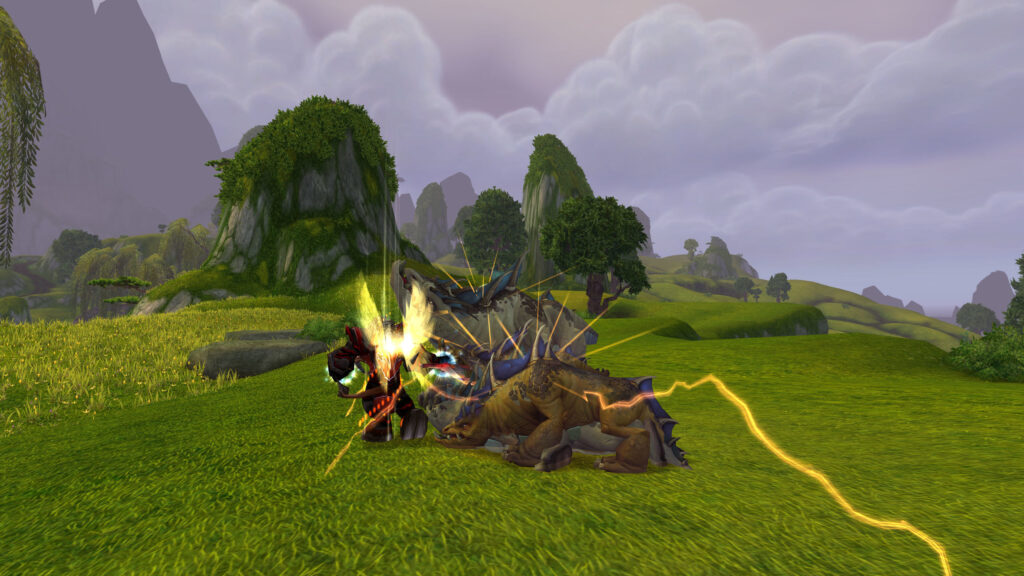
Players felt stronger not just because of damage numbers, but because their abilities looked and sounded devastating. Blizzard’s approach reinforced emotional feedback, making every cast an event rather than a routine click.
Animation as Storytelling
Each animation carries narrative weight. The slow wind-up of Chaos Bolt mirrors the Warlock’s mastery over unstable power, while the rhythmic channel of Penance reflects divine precision. Through animation alone, players understand who their characters are and how they express their power.
This design philosophy turns combat into theater—each spell a line in an unspoken dialogue between chaos and control.
The Role of Sound and Motion Sync
Sound design and animation in WoW are inseparable. The crackle of lightning, the whisper of Shadow magic, or the roar of a finishing move all reinforce visual timing. Blizzard uses sound as a secondary animation layer, amplifying rhythm and satisfaction.

When animation and audio align, the result is kinetic harmony. It’s why a Critical Strike or Spell Proc feels tangible—every sound, flash, and recoil tells your brain that you just did something powerful.
- Timing: Animation sync ensures smooth feedback and flow.
- Audio Reinforcement: Sounds accentuate motion impact.
- Color Psychology: Elemental colors guide emotional response.
Modern Animation Technology
Today, WoW’s animation engine integrates advanced particle layering, bone physics, and dynamic lighting. Spells now ripple across terrain, interact with armor materials, and even cast real shadows. These updates elevate immersion while maintaining WoW’s stylized art direction—a delicate balance between old-school charm and modern sophistication.
Few MMOs manage this consistency. Even after decades, WoW’s combat still feels instantly recognizable, proof that good animation transcends graphical age.
Conclusion
WoW’s spellcasting animation isn’t just visual spectacle—it’s language. It tells players who they are, what they’re capable of, and how power feels. Through fluid motion, intuitive feedback, and emotional resonance, Blizzard has turned combat into choreography, and every spell into a signature move.
In Azeroth, style isn’t just aesthetic—it’s identity. And nowhere is that more evident than in the art of spellcasting.